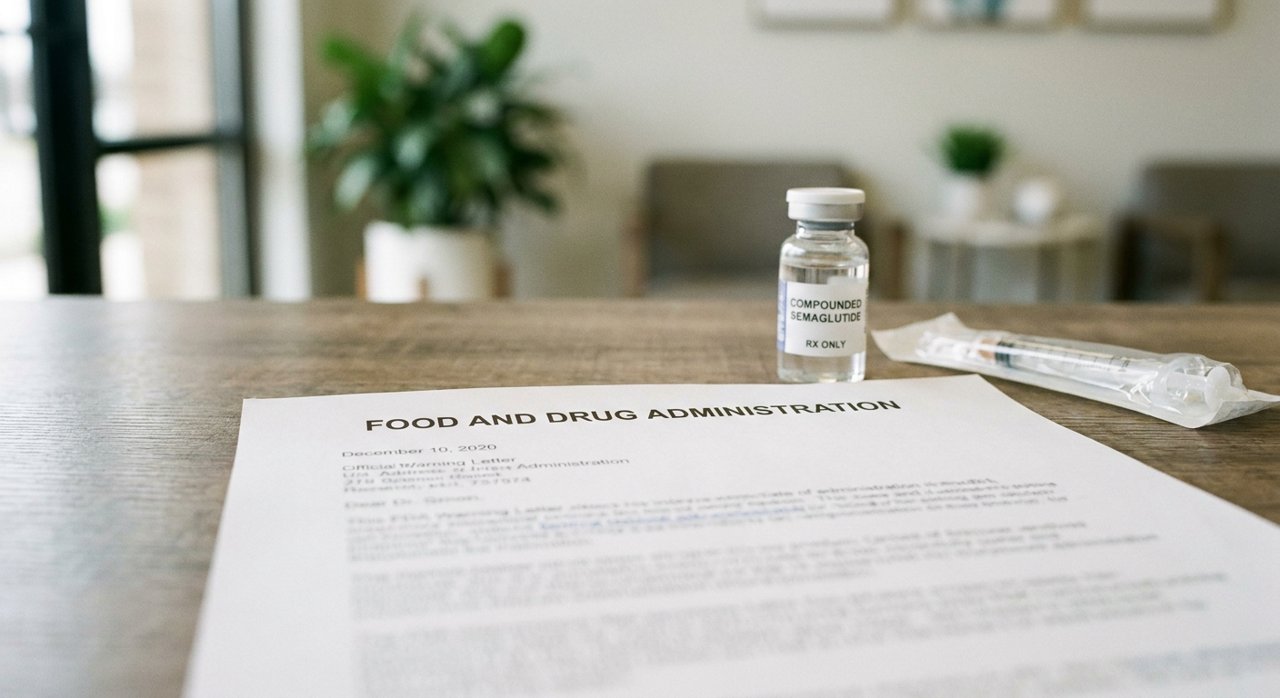
The FDA issued 25 warning letters during the week of June 15 to telehealth companies over false or misleading promotional claims about compounded GLP-1 products, the semaglutide and tirzepatide that have moved into a lot of aesthetic and wellness practices. The agency's theory is misbranding under the Federal Food, Drug, and Cosmetic Act through a "misleading net impression," meaning marketing that implies a compounded product is FDA-approved or equivalent to the brand-name drug when it is neither.
This is the third wave in under a year. Roughly 80 warning letters plus 40 untitled letters went out in September 2025, 30 more in March 2026, and now 25 in June. The pattern matters more than any single round: the FDA is not treating compounded-GLP-1 claims as a one-time sweep, and as of May 21 it had logged more than 1,700 adverse events tied to compounded semaglutide and tirzepatide.
If your clinic offers compounded GLP-1, the exposure is mostly in how it is described. Language that calls a compounded version "the same as" or "FDA-approved," or that leans on brand names to sell a compounded formula, is exactly what these letters target, on your own site, your intake forms, and your social posts. Worth a pass through that copy before the next wave.
Source: The National Law Review — https://natlawreview.com/article/fdas-focus-returns-compounding-and-telehealth-another-wave-warning-letters